Removal is a major decision that affects the property, nearby structures and safety during the work itself. Understanding the process can help homeowners know what to expect from start to finish.

Removal begins with an evaluation of tree condition, size, lean, branches, nearby structures, utilities, access and available drop zones. A dead tree, storm-damaged tree and healthy tree being removed for a project may require different planning.
The crew determines how material can be lowered safely. Open yards may allow controlled drops, while trees beside houses, pools, fences or utilities may require rigging. County Tree's About page says job planning considers rigging, drop zones and power-line clearance.
Large trees are often dismantled in stages rather than felled whole. Sections can be cut and controlled so they do not damage nearby structures. The method depends on the site's access and hazards.
The remaining trunk is cut into manageable sections according to site conditions. Driveways, gates, irrigation, landscaping and buildings can affect how sections are moved.
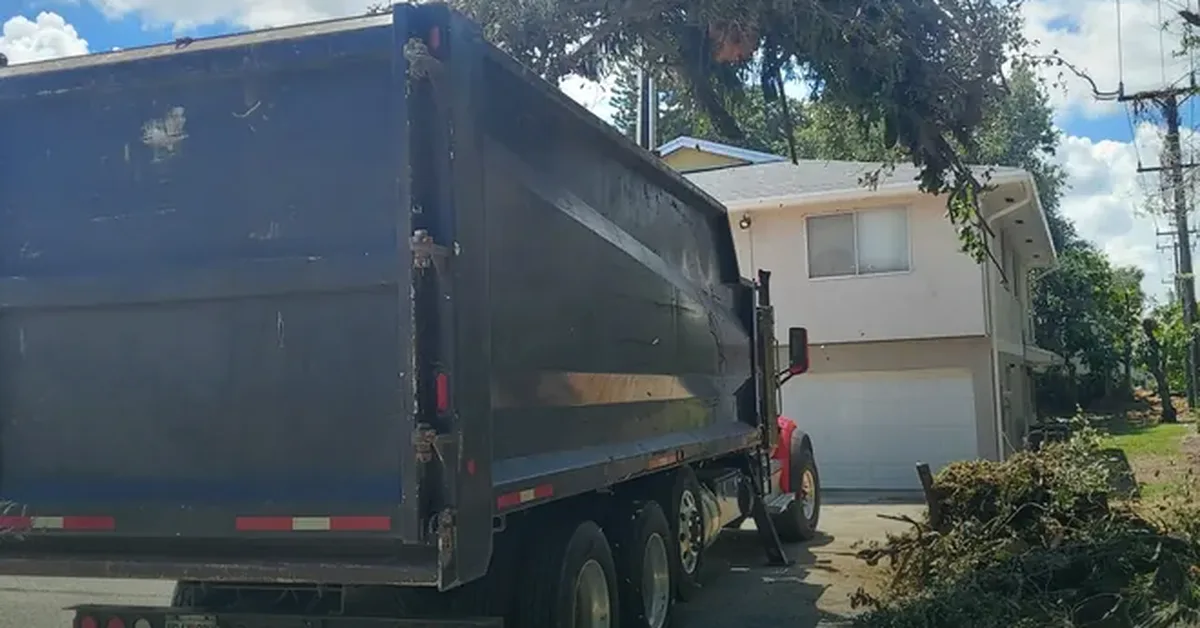
After removal, branches and logs must be processed and removed or left according to the agreed scope. County Tree's FAQ states that full haul-away is standard and wood chips can be left as mulch if preferred.
Tree removal does not automatically mean the stump is gone. If the area will be landscaped or reused, discuss stump grinding as part of the project. County Tree lists stump grinding among its services.
The job should finish with a walkthrough, debris removal and confirmation that access is clear. County Tree offers free estimates and transparent written scopes, so homeowners can confirm cleanup and related services before work starts.
It depends on size, condition, access, structures, equipment and cleanup requirements.
Yes, when the job is properly assessed and controlled cutting or rigging is used where necessary.
Not automatically. Ask for stump grinding to be included if you want the stump addressed.
County Tree says full haul-away is standard, while wood chips may be left as mulch if preferred.