Palm maintenance differs from broadleaf tree pruning. Homeowners may deal with dead fronds, seed pods, old growth and palms close to roofs, pools, walkways and driveways. Tall palms can require specialized equipment and safe access.
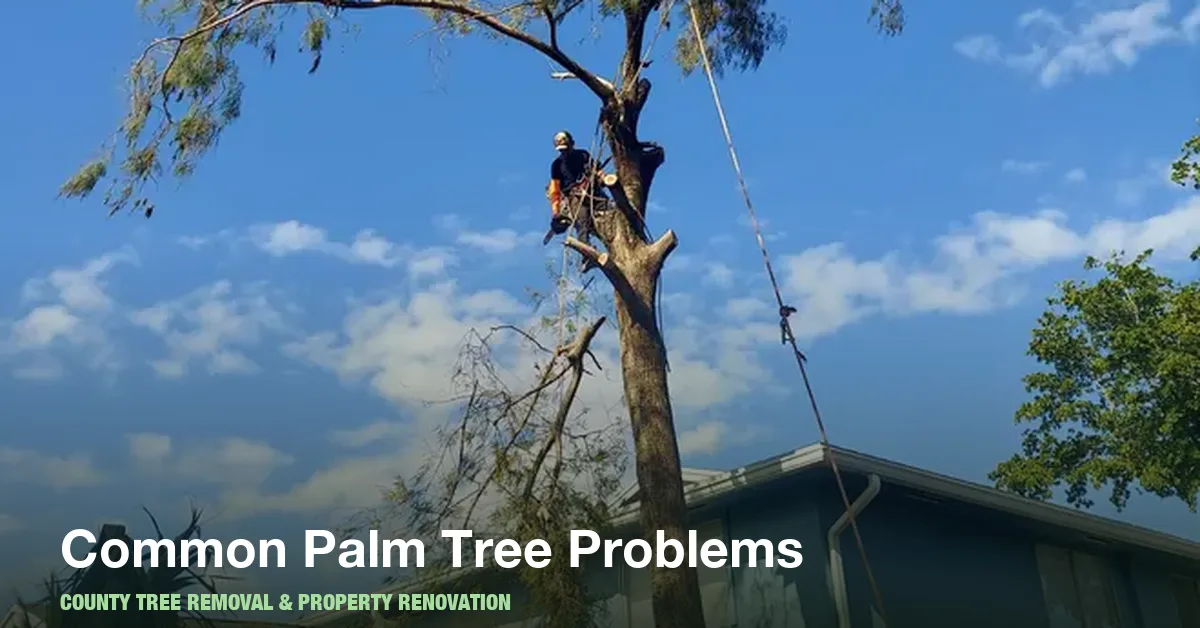
Dead or damaged fronds can become a nuisance or hazard, especially over areas where people gather. Do not use an unstable ladder to reach high fronds. The safest method depends on height, access and the surrounding property.
Seed pods and flower stalks can create additional cleanup and appearance concerns. Their removal should be based on the palm and the property's needs rather than aggressive cutting simply to make the tree look cleaner.
Location matters. Fronds touching a roof, growing over a pool cage or hanging over a walkway deserve attention. County Tree's live homepage lists specialized palm trimming along with its other tree services.

Removal may be appropriate when a palm is dead, unstable, severely damaged or cannot be maintained safely in its location. Height alone is not a reason to remove a healthy palm.
There is no single schedule for every palm. Species, growth rate, storm exposure, location and desired appearance matter. Regular inspection is better than blindly following one calendar interval.
Good palm service improves clearance and appearance while controlling where heavy fronds land. If a palm is tall, near a structure or difficult to access, professional service is the safer choice.
It depends on species, growth rate, location and property goals.
They can be removed when they create appearance, clearance or safety concerns.
Tall palms can require specialized equipment and safe access; difficult work is better handled professionally.
When it is dead, unstable, severely damaged or cannot be safely maintained.