Tree problems are easier to manage proactively than after a branch falls or a tenant reports a blocked driveway. A simple plan can include inspections, trimming, storm preparation and emergency contacts.
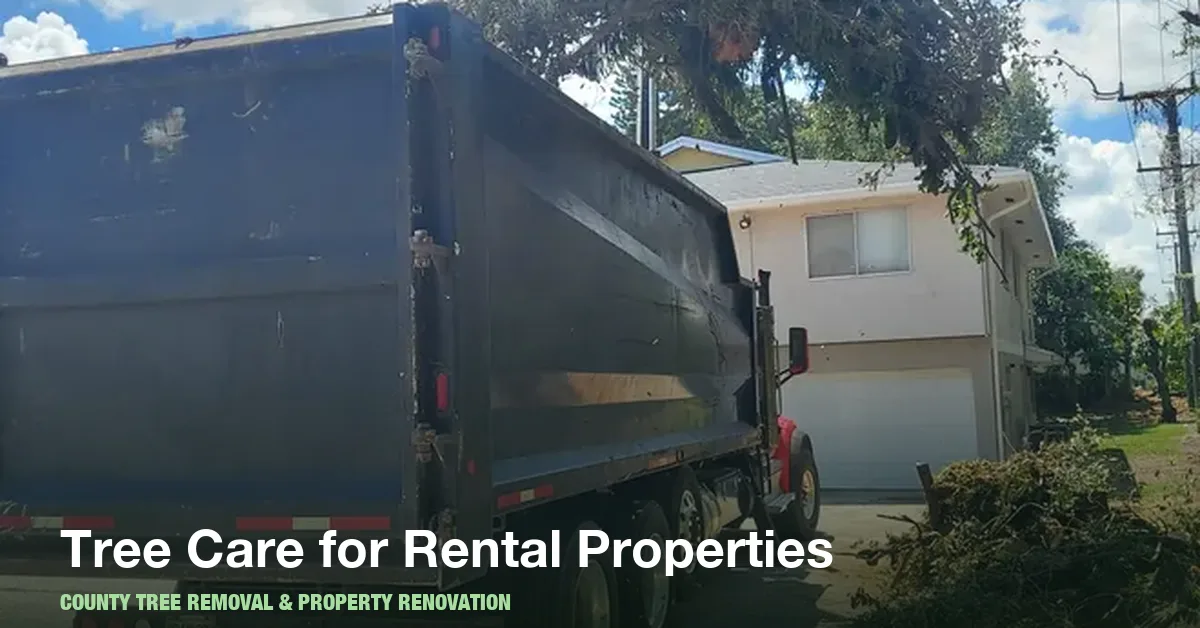
Look for dead branches, roof contact, blocked walkways, unexpected leaning, exposed roots, damaged trunks and neglected palms. Focus on areas tenants use every day such as entrances, parking and pool areas.
Branches that touch roofs or interfere with vehicles and walkways should be assessed. County Tree's live trimming page explains crown thinning, reduction, deadwooding and structural pruning.
Before high winds, inspect mature trees for deadwood, obvious instability, roof contact and neglected palms. County Tree's Hurricane Tree Preparation Guide provides a practical storm checklist.
Save estimates, invoices, photos and notes about significant work. Records make recurring maintenance easier to manage and can help document storm-related work.
If a tree blocks access, rests on a structure or becomes involved with a power line, keep tenants away and do not ask them to move large debris. County Tree's Emergency service explains how storm calls are prioritized.
For properties with significant trees, a recurring maintenance scope can simplify budgeting and vendor coordination. The schedule should reflect the actual property rather than a generic calendar.

Properties with mature trees and storm exposure benefit from regular visual checks and professional assessment when concerns appear.
Trees should be assessed before severe weather for deadwood and clearance issues; unnecessary heavy pruning should be avoided.
Keep away from the hazard and report it immediately. Never approach downed power lines.
County Tree offers residential and commercial tree care; the exact recurring scope should be agreed in the service plan.