Yellow leaves, thinning foliage or a few dead branches do not automatically mean a tree is dying. Trees can respond to heat, rainfall, root disturbance, pests, disease and physical damage. Look for patterns and progression rather than diagnosing the tree from one symptom.
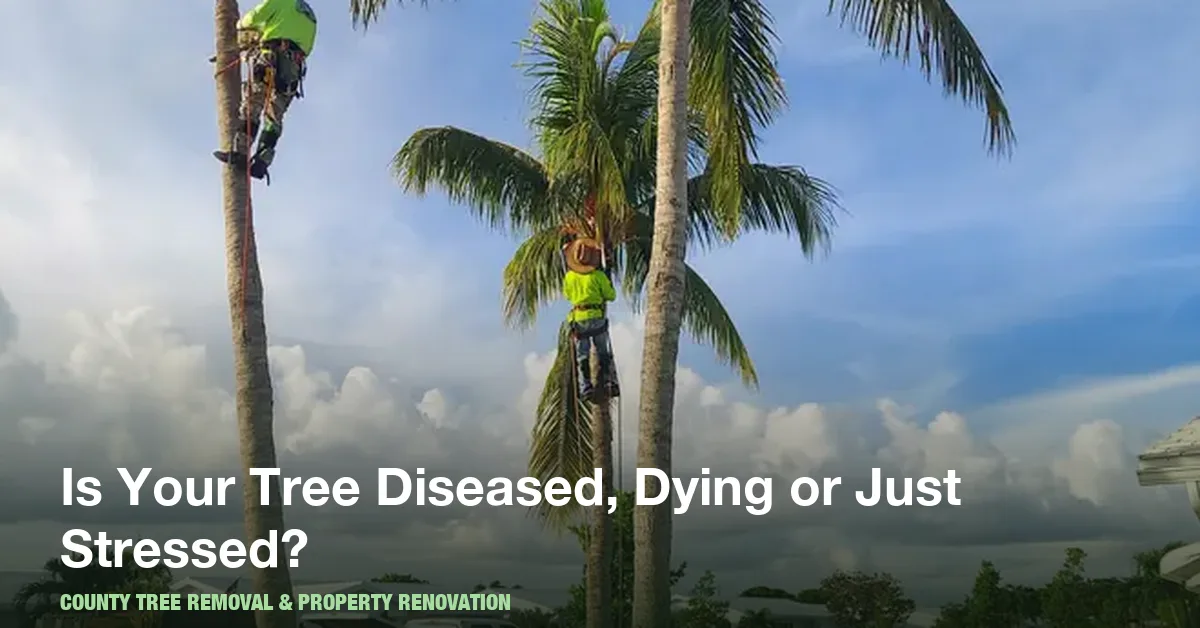
Watch for widespread thinning, unusual dieback, dead branch tips, broken limbs and sections of canopy that are declining faster than the rest. A single dead branch can often be removed, but progressive dieback deserves professional attention, especially when the tree is near a structure.
Large cracks, cavities, major wounds, detached bark or significant decay can indicate a serious structural issue. Do not climb a questionable tree to inspect it. A professional can evaluate defects from safe positions and determine whether pruning, monitoring or removal is appropriate.
Exposed roots, soil lifting, erosion, standing water or a tree that has shifted after a storm can indicate a root or stability concern. Construction, paving and soil compaction can also affect mature roots. Tell the tree professional about recent property work.
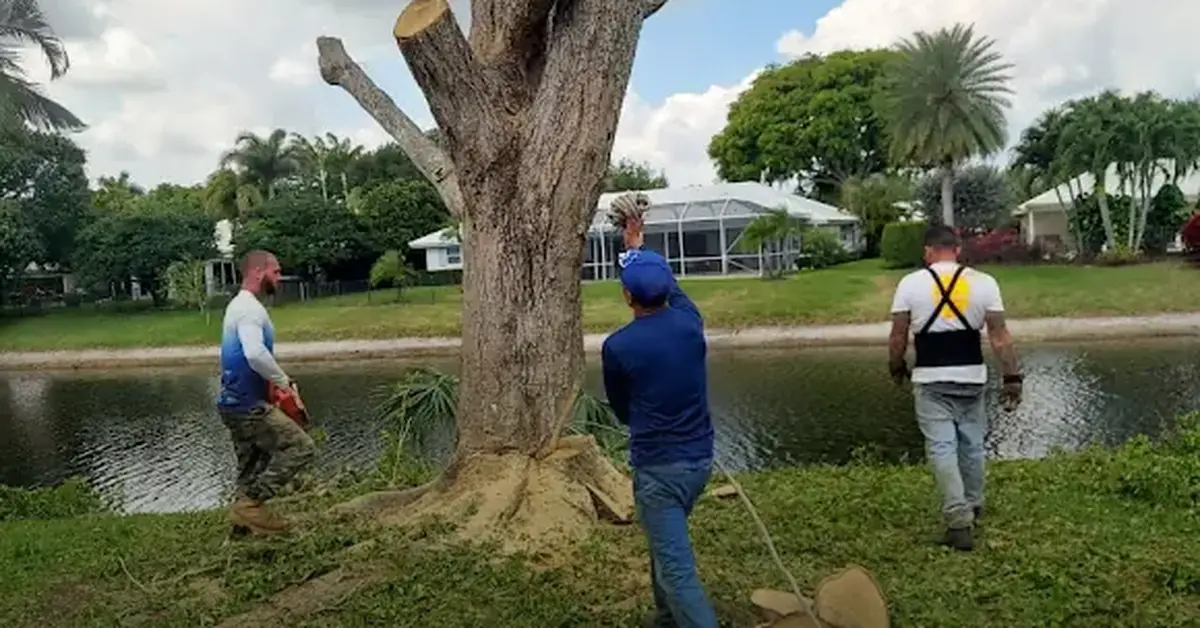
Pruning can remove dead, damaged or poorly positioned branches and can improve clearance. County Tree's live Tree Trimming & Pruning page covers deadwooding, crown thinning, crown reduction and structural pruning. Pruning, however, cannot correct every trunk or root problem.
Get a professional assessment when decline is spreading, major branches are dead, the tree has a new or worsening lean, there is significant trunk damage, or the tree stands over a home, pool, vehicle area or walkway. An assessment does not automatically mean removal; it establishes what the tree actually needs.
Persistent canopy decline, widespread deadwood, major structural defects or root instability are warning signs that deserve professional evaluation.
No. A natural lean is different from a new or worsening lean accompanied by root movement or soil lifting.
Sometimes it can remove damaged material, but trimming cannot solve every health or structural problem.
Call when symptoms are worsening, major limbs are damaged, or the tree is close to a structure or other high-risk area.