Trees can provide shade and privacy, but branches beside a pool or screen enclosure create special maintenance issues. Fronds and limbs can fall into the water, rub against screening, interfere with access or damage fragile structures. The goal is not to remove every nearby tree but to manage clearance and risk intelligently.

Watch for branches touching the enclosure, deadwood over seating areas, palms dropping fronds into the pool, and roots affecting nearby pavers or deck surfaces. Roots should not be cut casually because important roots can contribute to stability.
Selective pruning can address deadwood, overextended branches and clearance conflicts. County Tree's live Tree Trimming & Pruning page covers crown thinning, crown reduction, deadwooding and structural pruning. The correct cuts depend on the tree and should preserve useful structure.
Removal can be considered when a tree is dead, severely damaged, unstable or impossible to maintain safely in its current location. Near a pool cage or home, removal may require controlled rigging and section-by-section lowering rather than free-falling material.
Before work begins, identify the pool, cage, equipment pad, irrigation, lighting, gates and narrow access points. County Tree's About page explains its safety-first planning around rigging, drop zones and property protection.
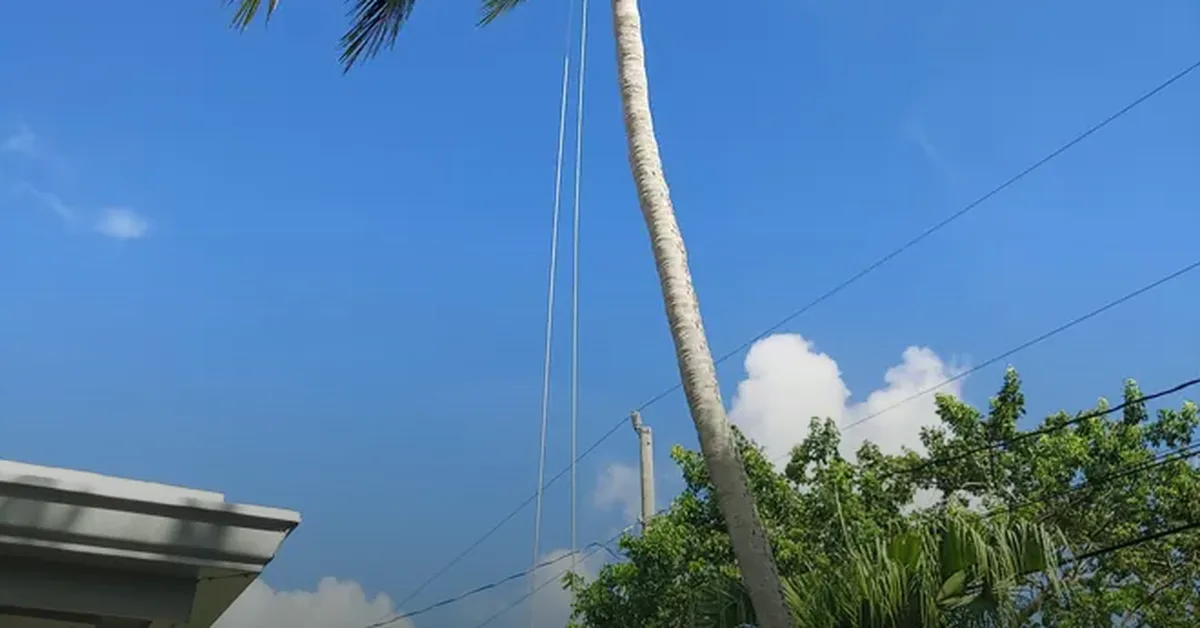
Regular inspections are better than waiting for a limb to fall. If branches are rubbing a cage, major deadwood hangs above the pool, or a tree has become unstable, request an assessment. County Tree provides free estimates through its live homepage.
Often, selective pruning can improve clearance, depending on the tree and structure.
Large limbs, ladders and chainsaws around structures are best handled by professionals.
Not without assessment because major roots may contribute to stability.
It can, especially when access and drop zones are limited.